
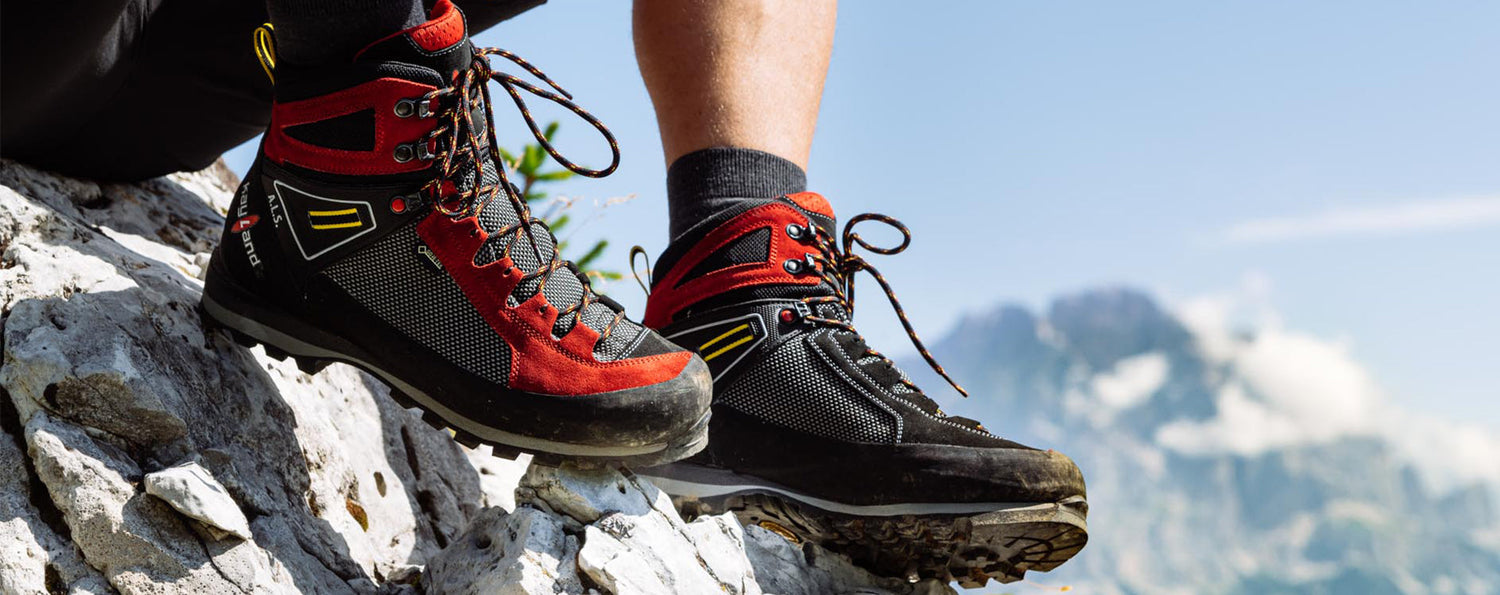
Two pairs of shoes, used the same amount of time, on the same trails. One has a sole worn down to nothing. The other looks almost new. Why such a difference? It comes down to one detail most people never think about in the store: the sole compound.
"A Shoe Is a Shoe"… Really?
You hear it all the time: it's comfortable in the store, so it should work anywhere. But a lightweight hiking shoe (built for moving fast, even running, on muddy trails with little weight) and a trekking shoe (built for climbing up and down mountains, on rock, carrying a loaded pack) aren't built the same way. And that shows up fast in how long the sole lasts.
Two Compounds, Two Purposes
A lightweight hiking shoe uses an ultra-grippy sole compound that sticks to almost any surface. Great for traction, but that type of rubber also wears out much faster.
A trekking shoe, on the other hand, relies on a harder, more durable compound. It trades some of that extreme grip and comfort for a sole that holds up on demanding terrain, loaded with weight, trail after trail.
That's why some customers are disappointed when a Vibram sole wears out in under a year — the issue usually isn't the brand, it's the type of Vibram compound used. There are several, built for very different uses.
Terrain Makes All the Difference
Take sandstone, a rock type common in Arizona: it acts almost like sandpaper on a sole. That's exactly what wore down a lightweight hiking shoe's sole in just one month on the trail. On those same trails, a trekking shoe with a harder, more durable Vibram compound came out nearly untouched.
The Other Extreme: The Rigid Trekking Boot
At the far end of the spectrum are Italian mountain boots with an ultra-rigid sole compound. This type of boot is built to last for years - in the mountains, in the city, pretty much everywhere. It's the choice for anyone who wants a single pair that can handle years of demanding trekking.
The Question We Always Ask in Store
It's a factor most people never think about, but at Plein Air Entrepôt, we think about it every time: where are you hiking? What kind of rock or terrain? That's the information that lets us point you to the right shoe - not just the most comfortable one in the store, but the one that will actually last on your trails.
Bottom Line
- A lightweight hiking shoe has an ultra-grippy sole that wears out faster.
- A trekking shoe or boot has a harder, more durable sole, built for mountains and the weight of a loaded pack.
- Terrain type (like sandstone) dramatically speeds up wear on the wrong sole.
- Ultra-rigid Italian mountain boots represent the other extreme: maximum durability, in the mountains and in the city.
- The right choice always depends on the terrain and trip you're planning - not just comfort in the store.
📍 1451 avenue du Mont-Royal Est, Montreal
🌐 pleinairentrepot.ca
🚚 Free shipping on orders over $80 in QC, ON & N.B.
Plein Air Entrepôt — Trekking, hiking & travel specialists since 2007. Expert advice at warehouse prices.